In its response to Norway’s proposed shelter regulations, HNDIC calls for independent inspections before existing spaces are designated as shelters, upgrades to existing civil defence shelters, and a requirement to build new shelters in high-risk areas.
HNDIC calls for verified protection and more civil defence shelters in Northern Norway
HNDIC has submitted its response to the proposed new regulations on civil defence shelters. The cluster believes the proposal needs substantial revision to ensure that shelters provide the protection civilians need.
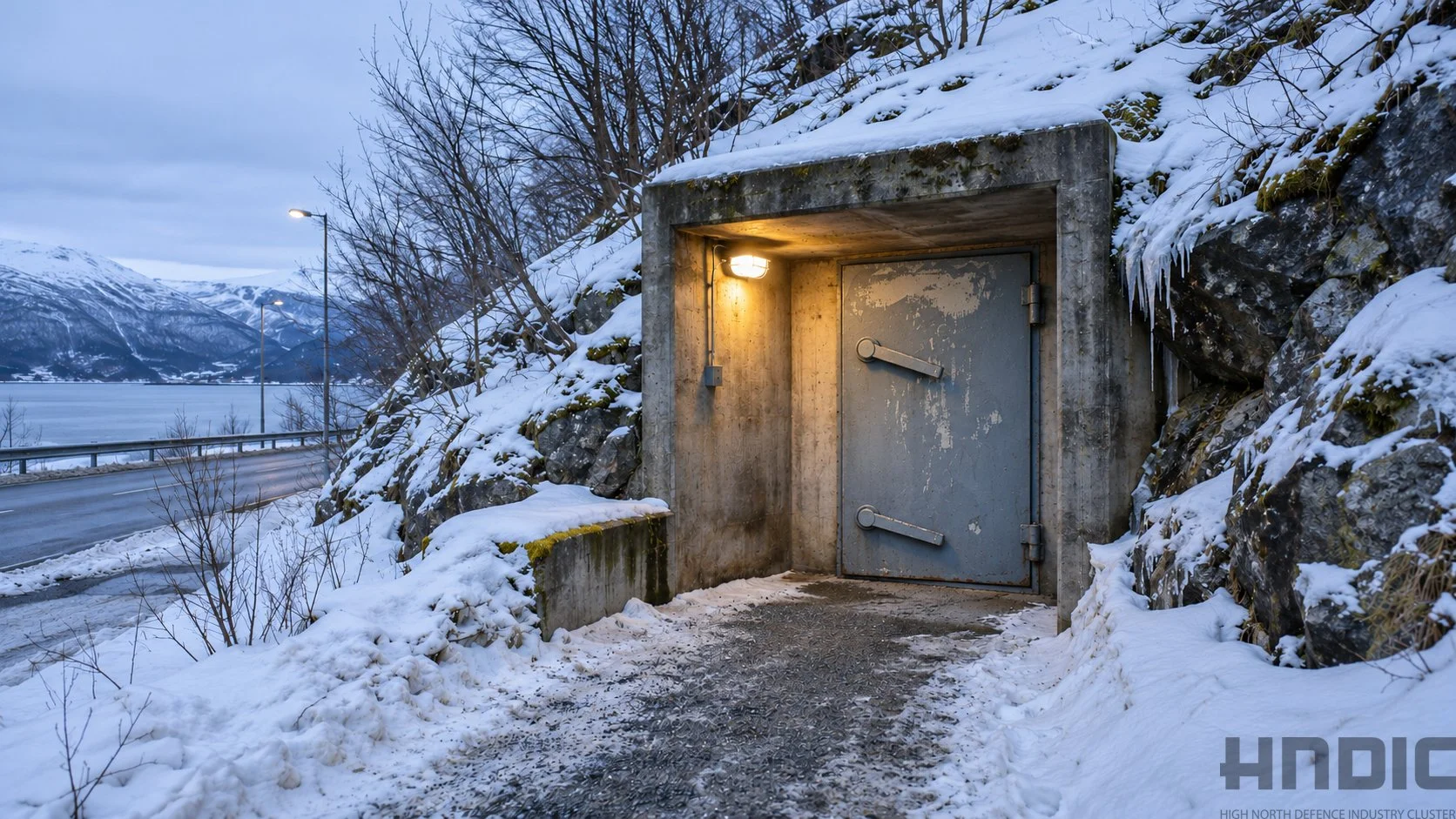
The Ministry of Justice and Public Security published the proposal for public consultation on the Norwegian government’s website on 19 June 2026. The consultation closed on 30 October 2026. Under the proposal, municipalities at particular risk would assess their need for shelter and could designate suitable spaces in existing buildings and infrastructure, such as underground car parks and tunnels, as protective spaces (dekningsrom). Read the Ministry’s consultation paper in Norwegian (PDF)
HNDIC supports the goal of protecting more civilians in wartime. Its main concern is that the proposal would allow municipalities to designate protective spaces before binding requirements are in place for documenting and verifying the protection they offer. The proposal also leaves construction requirements for a later stage and, in HNDIC’s view, gives too little weight to severe cold, the polar night and long distances in Northern Norway. HNDIC submitted the response on behalf of its member companies, with technical input from Besikt AS and TP Miljøteknikk AS, among others.
Protection must be verified before spaces count towards shelter capacity
Protective spaces can offer protection against the effects of conventional weapons and supplement purpose-built civil defence shelters. HNDIC calls for a binding national standard and independent technical inspection before municipalities designate, signpost or count these spaces towards available shelter capacity. The inspection should establish what forces the structure can withstand, how many people can safely use the space, and whether ventilation, emergency lighting and escape routes are functional.
For existing shelters, HNDIC proposes a national programme of condition assessments, functional testing and upgrades, with mandatory risk-based inspections and deadlines for addressing serious deficiencies. The cluster also calls for the regulations to set clear requirements now for building shelters with chemical, biological, radiological and nuclear (CBRN) protection in high-risk areas. These shelters are designed to protect against threats including radioactive fallout and biological and chemical warfare agents.
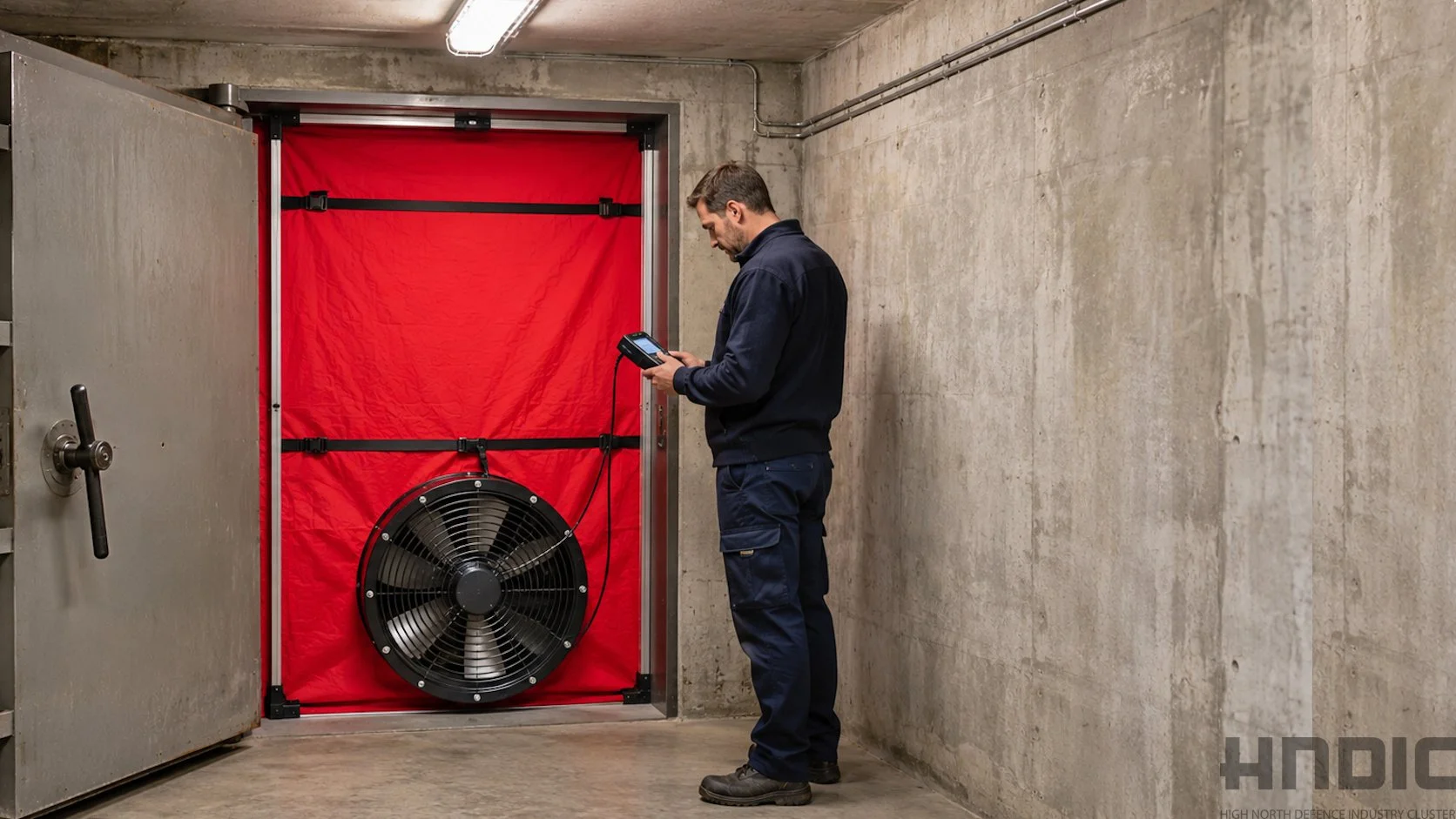
Shelters must be ready year-round
Severe cold, the polar night and long distances affect how quickly shelters can be made ready and how safely people can stay in them. HNDIC calls for requirements for heating and frost protection, and for backup power and ventilation systems to be designed and tested for severe cold. The cluster proposes state co-funding, regional stockpiles of critical spare parts and a pilot project in which the Norwegian Civil Defence, selected municipalities and local specialists assess shelter conditions and plan upgrades together.
HNDIC also calls for the regulations to explicitly allow defence industry companies and suppliers that support the reception and sustainment of allied forces to be designated as critical organisations. This would allow protection to be planned for personnel who must remain on site to keep ports, logistics and energy supplies operating during wartime.
Find HNDIC’s consultation response on the Norwegian government’s website